Do you install vinyl plank, laminate and tile flooring as well as hardwood?+
Yes. Our C-15 crews install luxury vinyl plank, laminate and tile in addition to engineered and solid hardwood. Vinyl plank suits kitchens, laundry rooms and other areas that see water. Laminate is a budget-friendly choice for dry rooms. Tile is the usual choice for bathrooms and entries. We help you choose room by room rather than pushing one product.
What prep does a concrete slab need before new flooring?+
Most homes in Los Angeles and the San Fernando Valley are built on slabs. Before installing, we test the slab's moisture, grind down high spots and fill low ones, and use the vapor barrier or underlayment that matches the flooring. Skipping this prep is the most common reason floating floors click, hollow out or separate.
Can I install hardwood over a concrete slab?+
Engineered hardwood, yes — glued down or floated over an appropriate underlayment, after the slab passes a moisture test. Solid hardwood, no, not directly; it needs a wood subfloor to nail into, and putting one over the slab costs height and money. Since a large share of LA housing built after the war sits on slab, this is the question that decides engineered versus solid for most homeowners here.
Is it worth refinishing my existing floors instead of replacing them?+
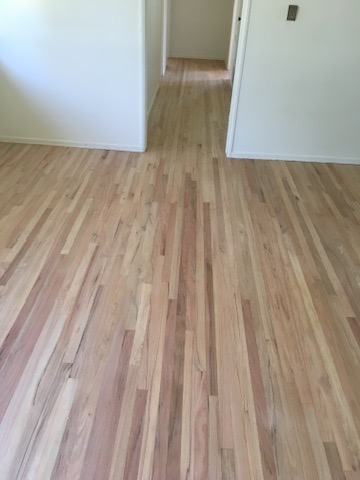
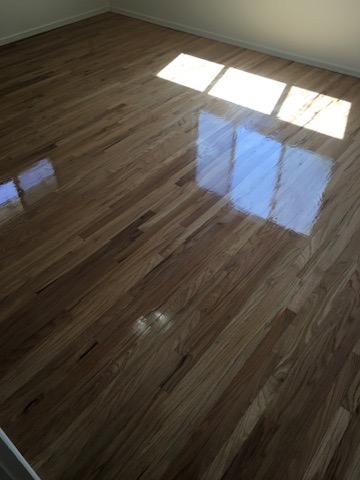
Usually, and in older LA neighborhoods it's frequently the best-value decision in the whole remodel. Homes from the 1920s through the 1950s often have original oak under carpet or laminate that's structurally fine and just needs sanding and a new finish. Refinishing costs a fraction of new material and installation. Replacement makes sense when the boards are too thin to sand again, when there's water damage, or when you want a different width or species.
Will hardwood cup or gap in Southern California?+
Not if it's acclimated and the substrate is dry. LA's problem is the opposite of most of the country: our indoor air runs dry, so boards shrink and gap rather than swell. Wide solid planks are the most susceptible. The preventable failures come from installing material that was delivered the same morning, or gluing to a slab that never got a moisture test.
How many times can a hardwood floor be refinished?+
Solid hardwood can typically take several full sandings across its life — realistically many decades of ownership. Engineered depends entirely on the wear layer above the core: a thick wear layer can usually be refinished once or twice, and a thin one can't be sanded at all. If refinishing later matters to you, that wear-layer spec is the number to ask about when choosing product.
How long does a hardwood floor installation take?+
For a typical single-family scope, prefinished material installs in a few days once prep is done. Site-finished floors take longer because sanding and each coat of finish need cure time, and you stay off the floor between coats. Subfloor leveling or slab prep, if the house needs it, adds days in front of everything else.
What does hardwood flooring cost in Los Angeles?+
It varies more than most trades because species, plank width, finish type and — above all — substrate prep drive the number. A flat, sound subfloor with prefinished engineered material is at one end; site-finished solid walnut over a slab that needs leveling is at the other. We price per project after seeing what's under the existing floor, rather than quoting a per-foot figure that changes the moment we pull up a corner of carpet.